Last updated November 18, 2026
Free written scope consultation - allowances, timeline, and change-order rules on paper before a single trade is scheduled
The Complete Bathroom Remodeling Guide for Santa Ana Homeowners
Roughly 40% of Santa Ana’s housing was built before 1970. That single fact changes how you should budget and plan a bathroom remodel. Behind that bathroom wall there’s a reasonable chance of galvanized supply pipe, no cement board under the tile, and a subfloor that hasn’t been looked at since Nixon was in office. A bathroom in a 1950s house near downtown Santa Ana is a different project than the same square footage in a newer build, and the guides written for new construction won’t warn you about any of it. This guide is written for the housing stock that actually exists here: what to inspect before demo, how Santa Ana permitting works, what drives the real cost, and how to stay functional while it’s torn apart.
Quick Answer
A bathroom remodel in Santa Ana typically runs $18,000 to $45,000 for a full gut remodel of a hall or primary bath, while a cosmetic refresh (vanity, fixtures, paint, no tile removal) usually lands between $6,000 and $14,000. In homes built before 1970, expect an inspection pass before demo to add line items for plumbing material, subfloor condition, and vent routing that most quotes leave out. The biggest cost variable isn’t the tile you pick; it’s what’s behind the existing tile.
Styles & brands we work with
- Kitchen remodeling
- Bathroom remodeling
- Home additions & ADU
- Roofing
- Windows & doors
- Driveway & pavers
- Fence
Table of Contents
- The pre-demo inspection every older Santa Ana home needs
- Santa Ana permits: when you need one and what triggers plan check
- Cosmetic remodel vs. wet-area rebuild
- Water pressure and supply line sizing in older Santa Ana homes
- How to sequence a single-bathroom remodel
- What a bathroom remodel costs in Santa Ana
- Common mistakes to avoid
- When to call a professional
The Pre-Demo Inspection Every Older Santa Ana Home Needs
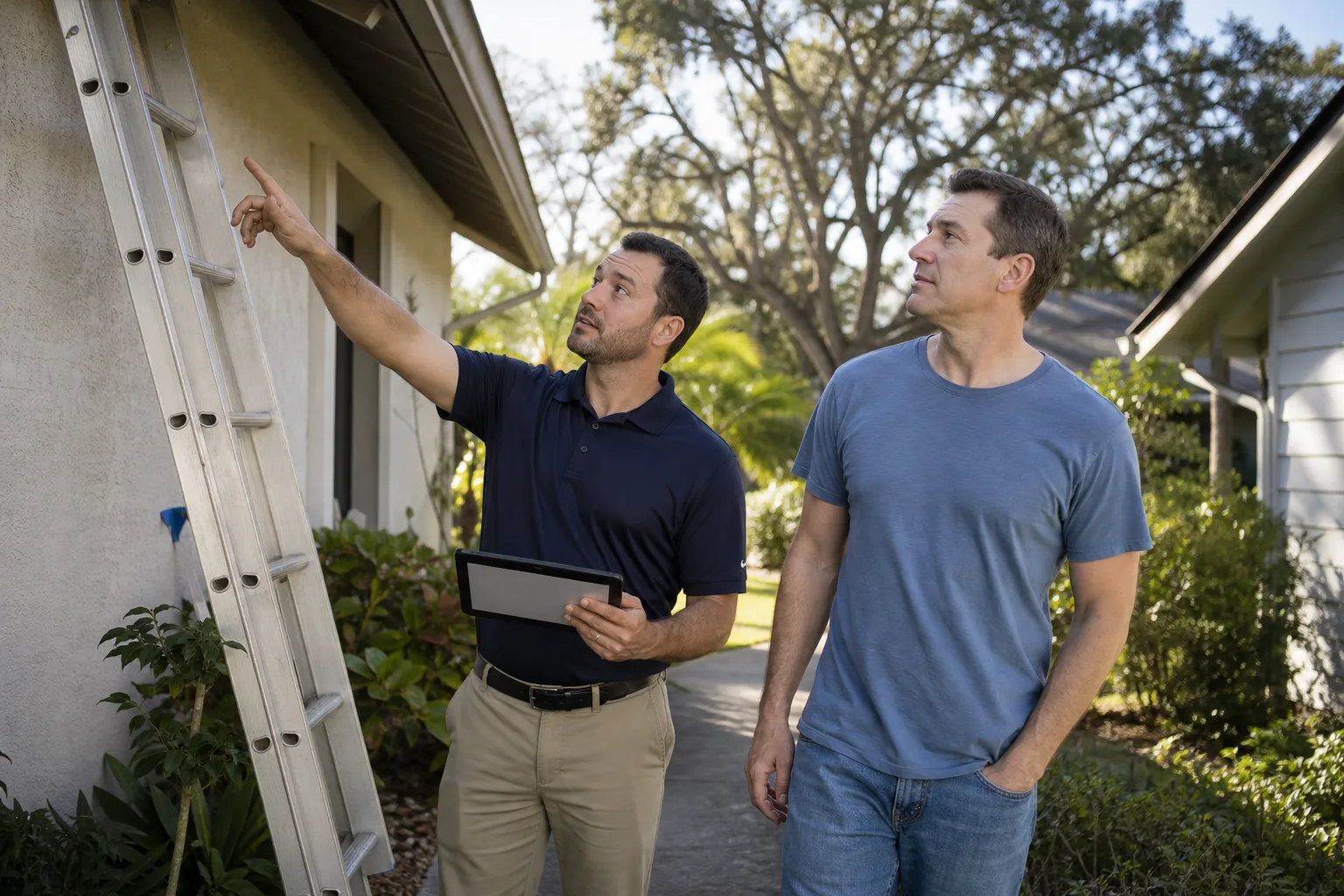
Before anyone swings a hammer, a proper pre-demo walk-through in an older Santa Ana home covers three things that generic guides skip: plumbing material identification, subfloor condition, and exhaust vent routing. Skip any of these and you’ll discover the problem mid-demo, when the tile is already in a dumpster and you’re committing to a change order you didn’t plan for.
Plumbing material identification means looking at the supply lines and drain stack and confirming what they’re made of. Copper is fine. Galvanized steel is a warning sign. Polybutylene is a bigger one. In central Santa Ana neighborhoods like French Park and Lacy, we still find original galvanized runs in houses that were never re-piped. Knowing that before demo means the plumbing rough-in gets scheduled into the job instead of blowing up the schedule in week two.
Subfloor condition is the second piece. Older homes often have a layer of original tile over a mortar bed, or tile over tile over plywood. You can’t assess the plywood until the top layer comes up, but you can probe from the crawlspace or from below if there’s access, and you can check for soft spots around the toilet flange and tub drain. A subfloor that’s been slowly rotting under a failed wax ring is a real discovery, and it’s a discovery you want in the estimate, not the middle of the job.
Exhaust vent routing is the third. Bathrooms in older Santa Ana homes often vent into the attic or, worse, into the wall cavity. That’s a moisture problem that feeds mold behind the drywall you’re about to install. Ask where the vent terminates before the new fan goes in. A numbered pre-demo sequence:
- Identify supply line material and drain stack material at the fixture connections.
- Check water pressure with a gauge at the hose bibb nearest the bathroom.
- Probe the subfloor for soft spots around the toilet and tub; check from below if accessible.
- Trace the exhaust fan duct to its termination point at the exterior or roof.
- Confirm whether the existing floor is tile-over-tile or a single layer.
- Look up the City of Santa Ana permit history for the address.
This walk-through takes an hour. It saves weeks. It also tells you whether you’re looking at a cosmetic job or a wet-area rebuild before you sign anything.
Santa Ana Permits: When You Need One and What Triggers Plan Check
In Santa Ana, any bathroom remodel that moves or replaces plumbing, electrical, or mechanical work generally requires a permit. A pure cosmetic swap – new vanity, new mirror, paint, a faucet replacement – doesn’t. Anything that touches the drain, moves a fixture, relocates a light, adds a circuit for a heated floor, or changes a tub to a shower does.
The City of Santa Ana Building & Safety Division issues the permits, and the inspector who shows up works for you. That’s not a line. The permit inspector exists to confirm the work meets code before it gets buried behind drywall, and every inspection signed is one more piece of paper you hand the next buyer.
What triggers a full plan check rather than an over-the-counter permit:
- Structural changes – removing or modifying a load-bearing wall, which comes up when homeowners want to combine a tiny bath with a closet.
- Converting a tub to a walk-in shower requiring drain relocation and slope changes.
- Adding square footage to the bathroom footprint.
- Any electrical panel upgrade or new subpanel.
- Relocating a toilet or moving the wet wall more than a few inches.
The phrase homeowners hear most is “like for like.” In practice, like-for-like replacement means swapping a fixture in the same location with the same rough-in dimensions. That’s usually a simple permit. Anything that changes the location, the rough-in, or the underlying system is a different permit tier, and it comes with a different review timeline. Ask any contractor which tier your project falls into before you sign, not after. If you’re planning to combine a bathroom with a larger addition, that conversation overlaps with what we cover in our guide to home additions & ADU in Santa Ana.
Cosmetic Remodel vs. Wet-Area Rebuild
The cost gap between a cosmetic bathroom refresh and a wet-area rebuild is determined almost entirely by what’s behind the existing tile, not by the finish selections. A homeowner can spend $12,000 on a beautiful vanity and tile and still be looking at a $30,000+ job if the membrane under the old tile is compromised and the subfloor needs replacement.
A cosmetic remodel typically includes:
- New vanity, countertop, sink, faucet, mirror, and lighting.
- New paint and caulk.
- Toilet replacement in the same location.
- Flooring overlay where the subfloor is sound.
A wet-area rebuild is a different scope. The tile and backer come out, the waterproofing gets rebuilt to modern standards (not the 1960s mortar-bed method), the plumbing rough-in is inspected, the vent is corrected, and the entire wet zone gets reconstructed. In our experience, the trigger for a rebuild is usually one of three things: a shower pan that’s been leaking slowly into the subfloor for years, a tub surround with no waterproofing behind the tile, or original galvanized drain lines that are already near the end of their service life.
Here’s the practical way to think about it. If the drain and supply rough-in are sound and the waterproofing under the existing shower isn’t failing, you can probably do a cosmetic refresh and get another decade out of the room. If any of those are in question, you’re looking at a rebuild, and it’s cheaper to know that now than to install a $4,000 tile job over a failed pan.
Water Pressure and Supply Line Sizing in Older Santa Ana Homes
Half-inch galvanized supply lines are still running in a lot of older single-family and multi-unit properties in central Santa Ana. Galvanized steel corrodes from the inside out. The pipe diameter you measure at the fitting is not the diameter the water flows through after 60 years of mineral buildup. That’s why a bathroom that once had great pressure now dribbles the shower head.
What to check before a remodel commits to the existing plumbing:
- Static water pressure at the nearest hose bibb, measured with a gauge. A reading under about 45 psi at the street-facing fixture is worth investigating.
- Flow test at the shower valve and the tub spout – if the drop between them is large, the supply line is likely the bottleneck.
- Supply line material identification at the rough-in – copper, PEX, CPVC, or galvanized.
- For multi-unit lots in Santa Ana (duplexes and small apartment buildings are common in the midtown and Wilshire Square areas), confirm whether the bathroom shares a supply branch with a kitchen or laundry, which changes the sizing calculation.
If the supply is original galvanized, the honest answer is usually to replace the run to the bathroom during the remodel rather than after. It’s a fraction of the total project cost while the wall is open and a much larger line item once the new tile is on. A licensed plumber should make the call, but the decision belongs in the pre-demo inspection, not the change order.
How to Sequence a Single-Bathroom Remodel
If you have only one bathroom, the schedule matters as much as the budget. The longest stretch without a functional toilet and shower is not a fixed number – it’s a scheduling decision. Get the sequencing right and you’re camping on a bucket for a few days. Get it wrong and it’s three weeks.
The sequence that works:
- Rough-in first. Plumbing, electrical, and vent work all happen before any backer board or tile goes up. That’s the inspection window and it’s the longest stretch without a functioning fixture.
- TC (toilet and shower) last possible moment. Set the new toilet and get the shower valve functional before the finish tile work on floors and walls is complete. A working toilet and a working shower valve with a temporary pan gets you through the finish phase comfortably.
- Stage the tile delivery ahead of time. Material lead times will wreck a schedule faster than any labor issue. Order tile and fixtures so they’re on site before demo, not ordered the day after.
- Schedule the inspection window tightly. The rough-in inspection is usually a day or two out in Santa Ana. Build the buffer into the schedule rather than discovering it when the crew is standing idle.
- Install the toilet and shower first, then vanity and finishes. Homeowners can live without a vanity for a week. They cannot live without the toilet.
In practice, a single-bathroom remodel that’s sequenced this way usually means 5 to 10 days without a working shower. A poorly sequenced one stretches to three or four weeks. Ask your contractor to write the sequence into the schedule before demo, and confirm which day you’ll be offline. That’s a conversation worth having in writing.
What a Bathroom Remodel Costs in Santa Ana
Santa Ana pricing is generally a little below Orange County coastal cities and a little above the Inland Empire, which reflects the local labor market and permit costs. Here’s what we see on typical jobs in this market:
| Scope | Typical Range |
|---|---|
| Cosmetic refresh (vanity, fixtures, paint, no tile removal) | $6,000 – $14,000 |
| Mid-range hall bath (new tile floor, tub surround, fixtures, same rough-in) | $14,000 – $24,000 |
| Full gut remodel, primary bath, same footprint | $24,000 – $38,000 |
| Full gut remodel with plumbing repipe on galvanized supply | $32,000 – $48,000 |
| Wet-area rebuild with subfloor replacement | $30,000 – $55,000 |
| Walk-in shower conversion (tub-to-shower, drain relocation) | $18,000 – $30,000 |
| Permit fees (varies by scope) | $400 – $1,800 |
Allowances are where surprise invoices come from. A vanity allowance of “up to $800” that doesn’t specify the countertop, sink, faucet, or hardware is not a real allowance. Every scope, every allowance, and every price change should arrive in writing before work happens. That’s how we quote, and it’s the difference between an estimate and a guess.
Common Mistakes to Avoid
- Skipping the pre-demo inspection to save the time. An hour of inspection prevents weeks of change orders. In a pre-1970 Santa Ana home, the inspection is the estimate.
- Assuming the existing waterproofing is fine because the tile looks okay. Tile hides failing shower pans and mortar beds that were never intended to last 60 years. The tile is the last thing to fail.
- Choosing tile before choosing a plumbing material plan. If the supply is galvanized and getting replaced, the wall stays open longer and the tile schedule shifts. Pick plumbing first.
- Letting a contractor tell you permits are optional. Permits and inspections are how you protect the resale value of a Santa Ana home, and they’re how the work gets verified. The inspector works for you.
- Buying a walk-in shower conversion before checking the drain. A tub drain and a shower drain are not in the same place, and moving it changes the permit tier.
- Scheduling the single bathroom without writing the sequence down. A verbal “we’ll have you back in a week” is a hope, not a schedule.
- Skipping the exhaust vent check. A vent that terminates in the attic feeds mold behind the new drywall. Confirm the termination point before the ceiling closes.
See the difference
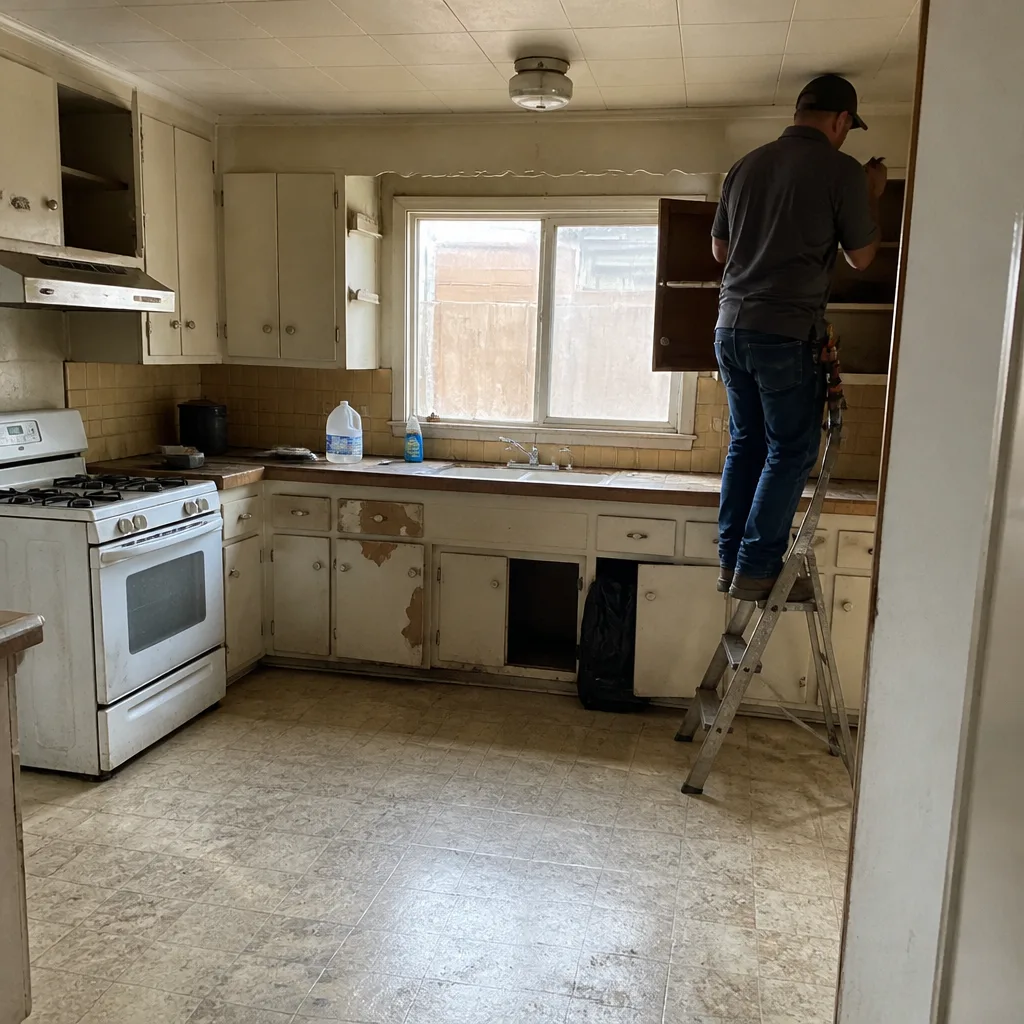 Before
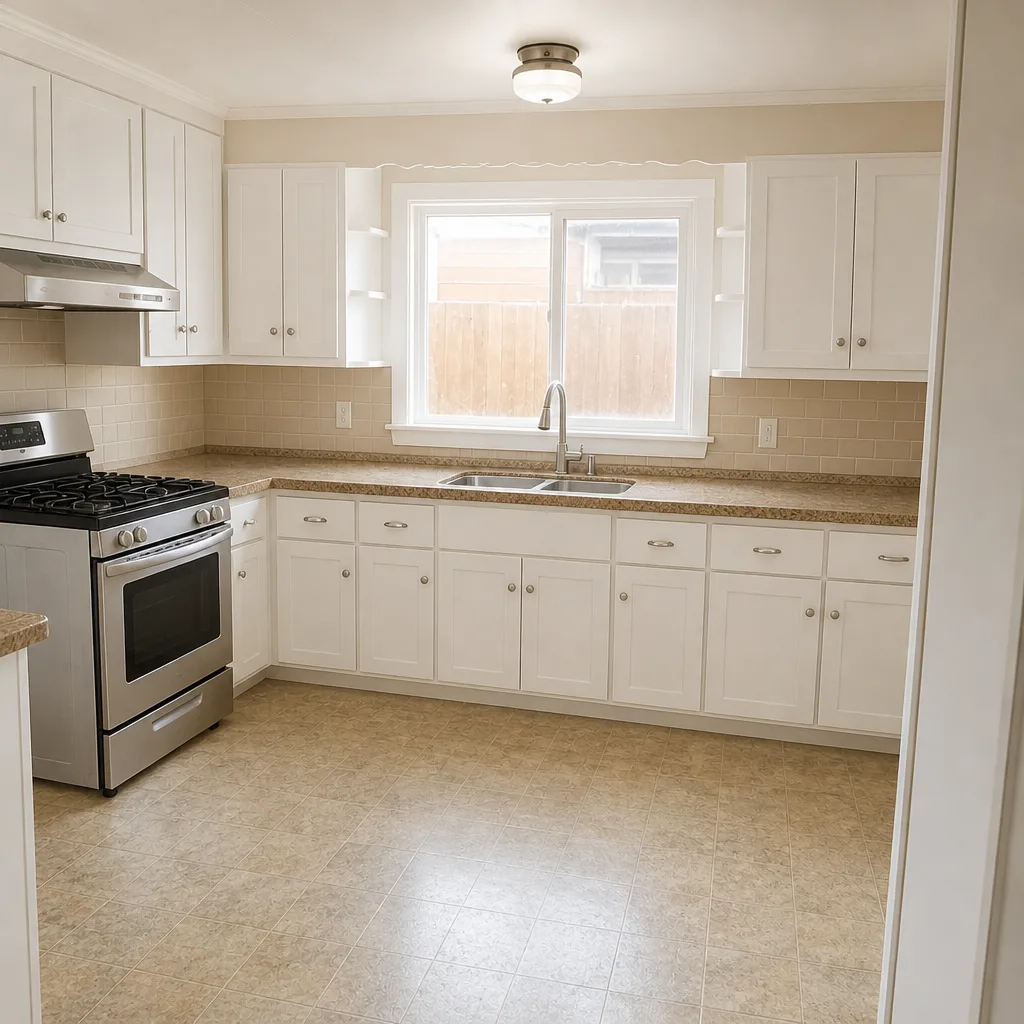 After
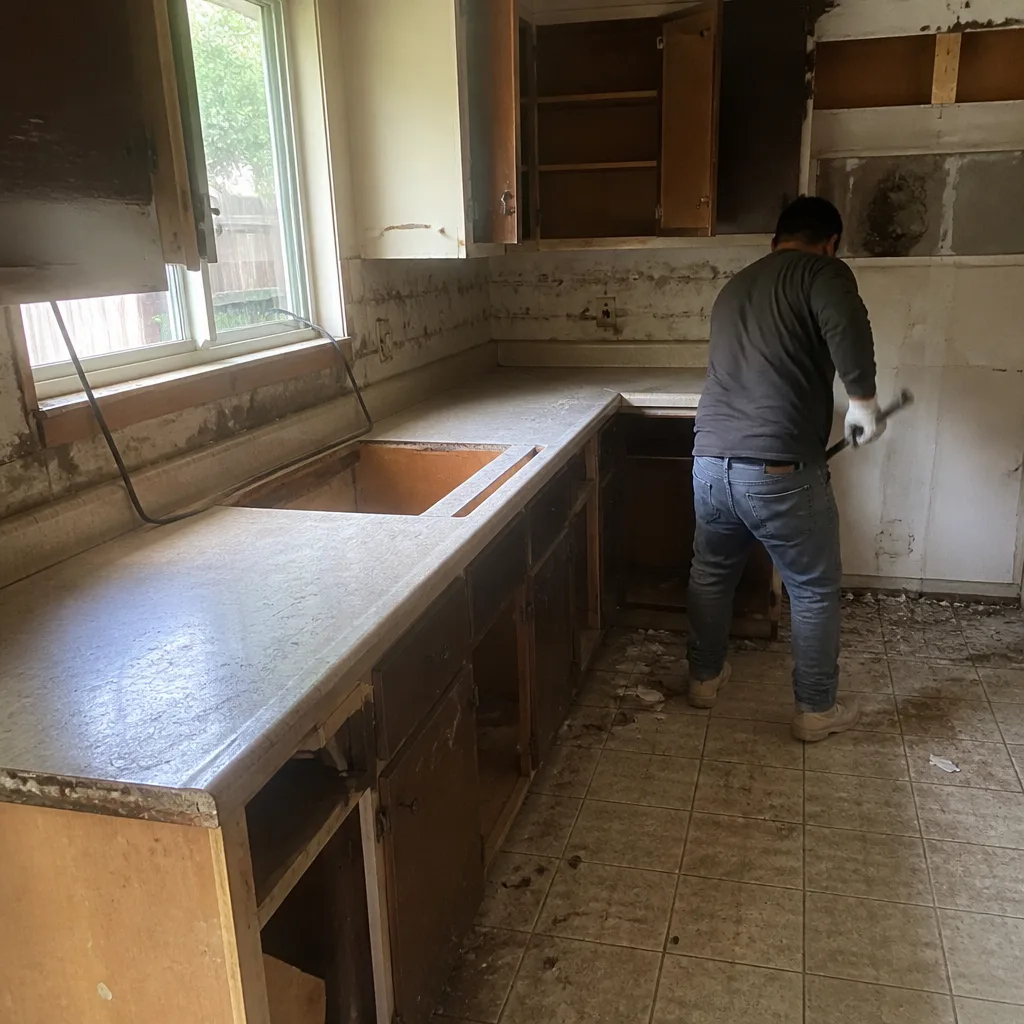 Before
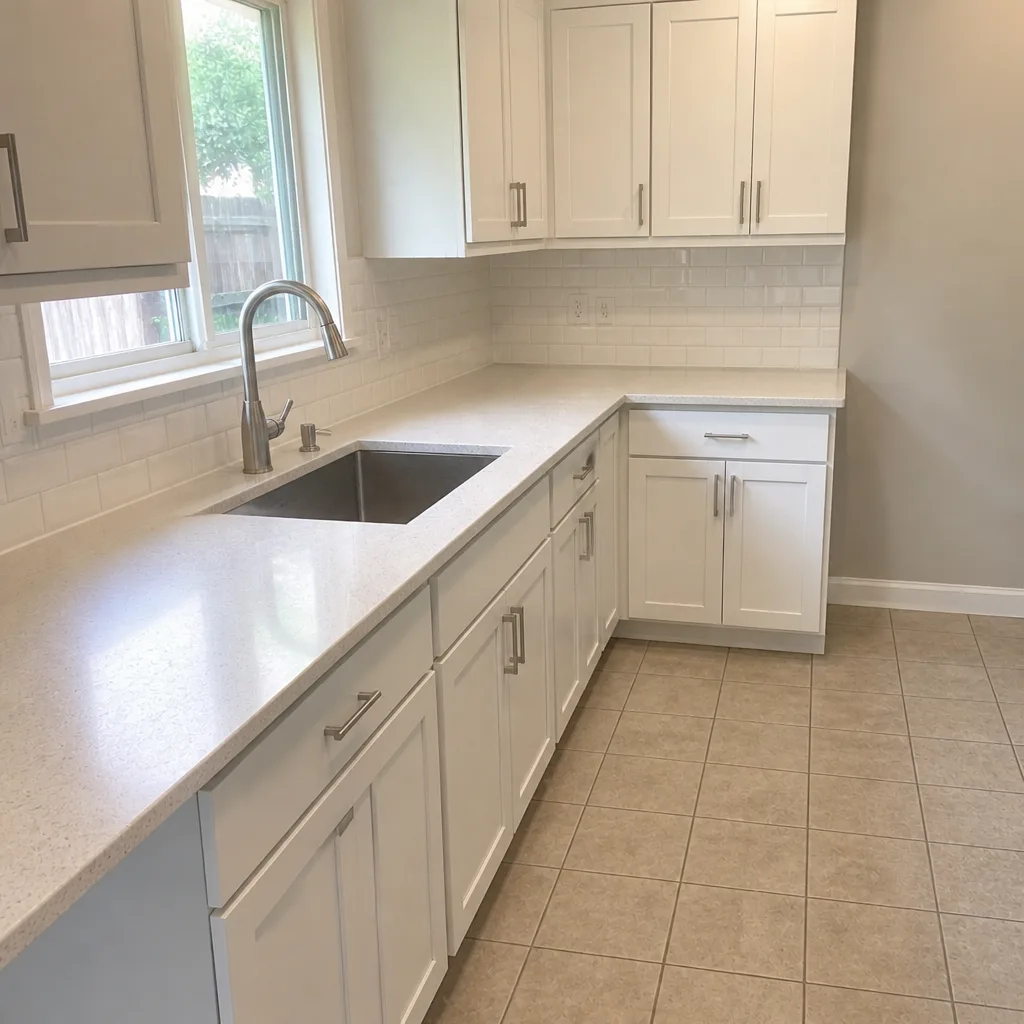 After
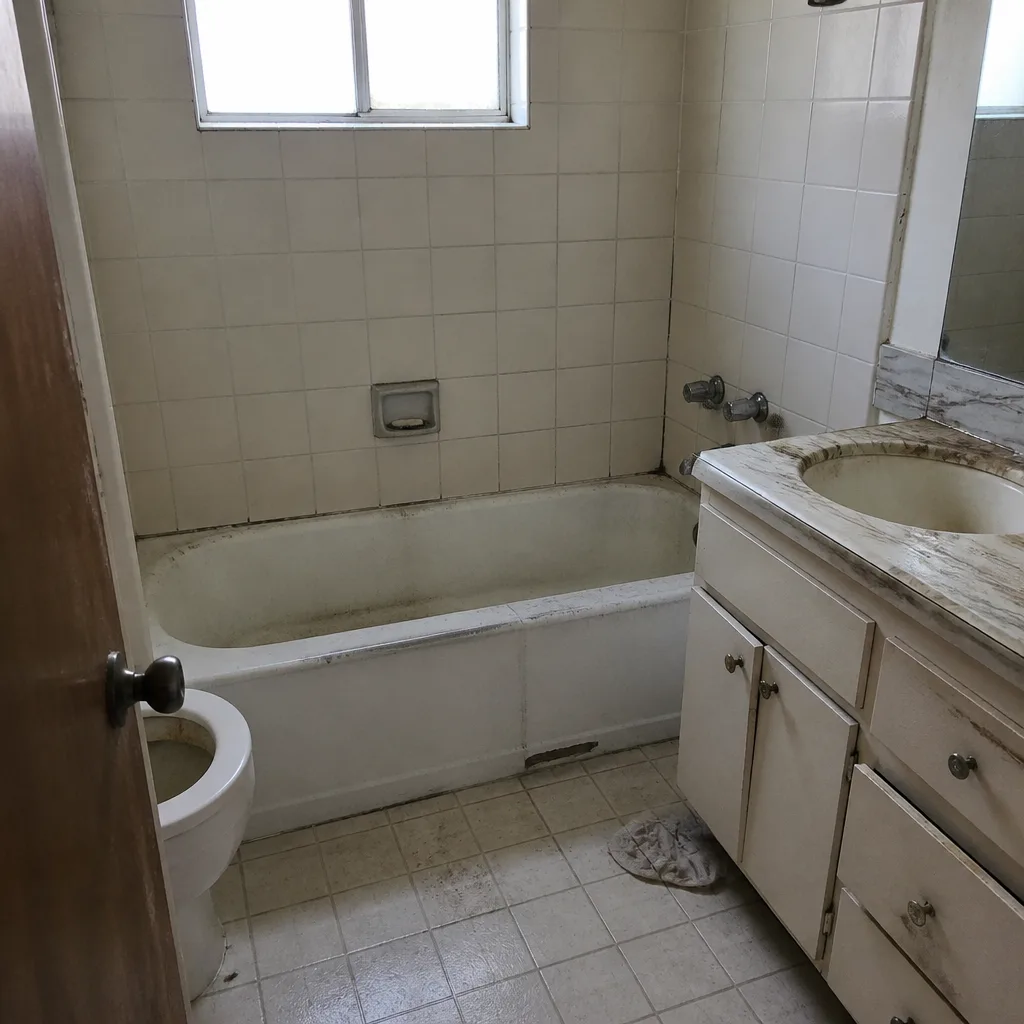 Before
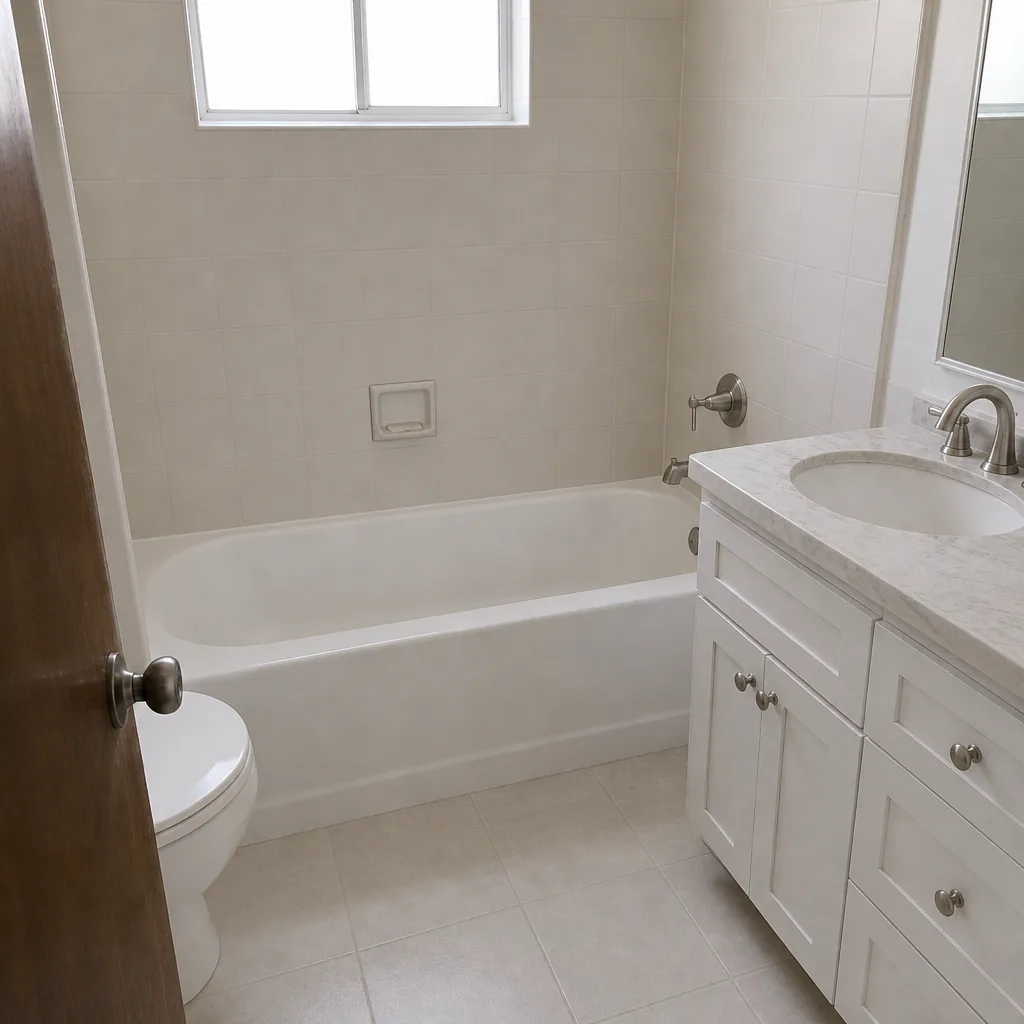 After
When to Call a Professional
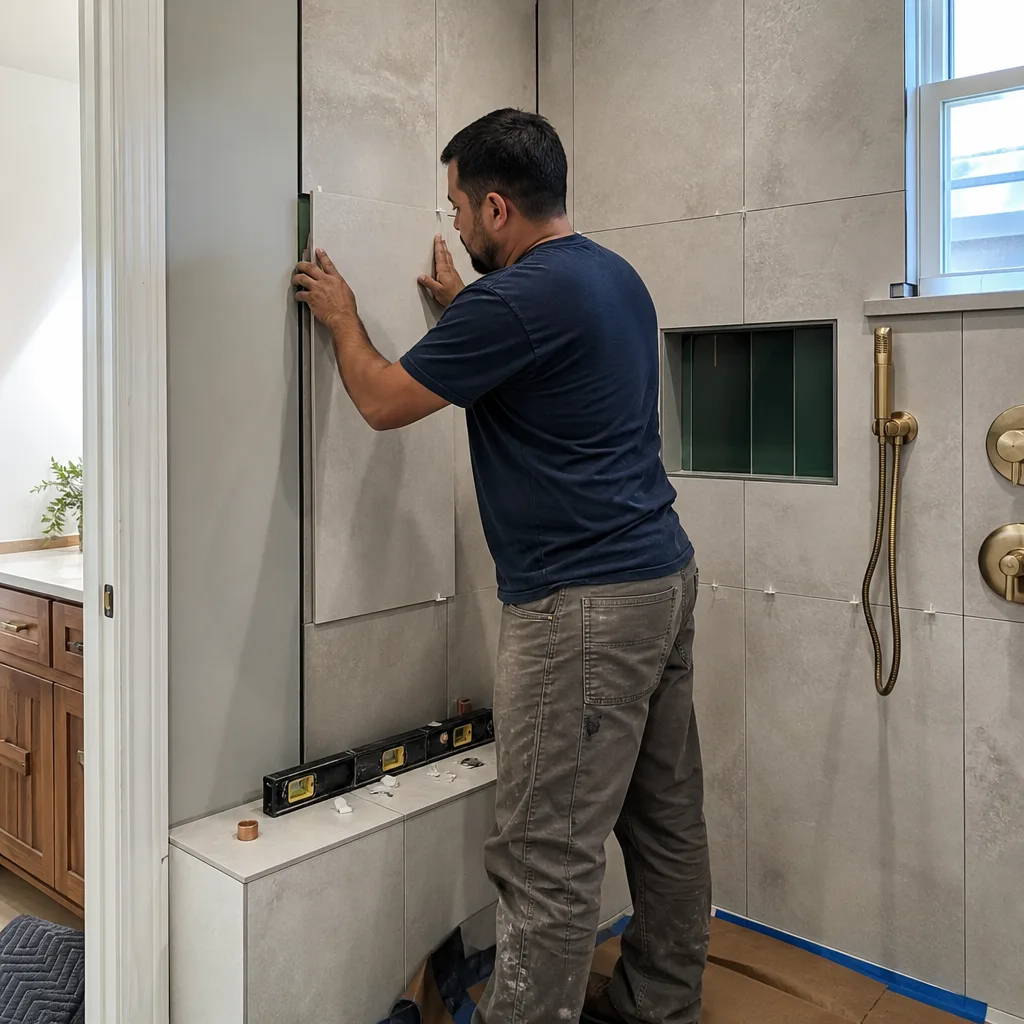
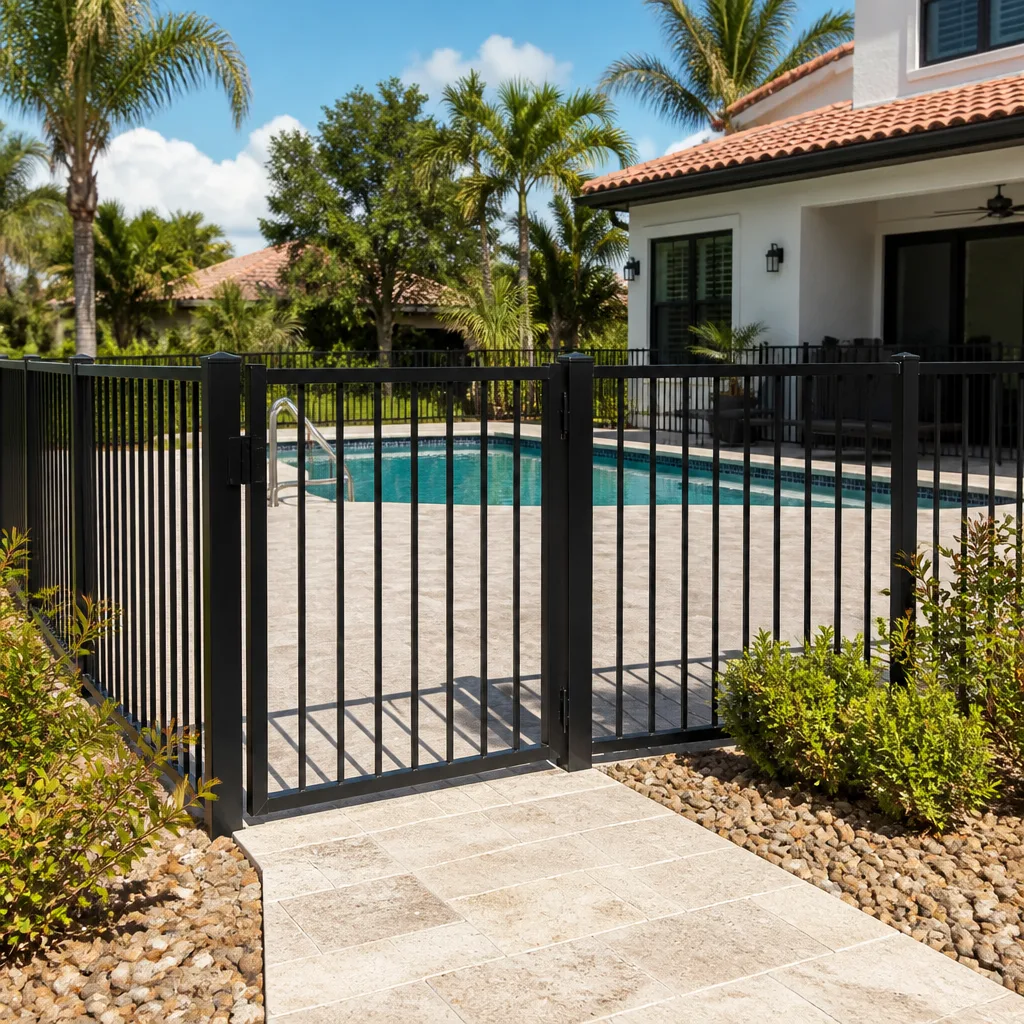
Call a licensed professional when the work touches the wet wall, the electrical panel, the gas line, or the structural framing. Replacing a vanity or swapping a faucet is a homeowner-level job. Removing a tub, relocating a drain, opening a wall around galvanized supply lines, or adding an exhaust fan circuit is not. In older Santa Ana homes, the dangerous parts are behind the wall, and that’s exactly where DIY becomes expensive or unsafe. If you’re also planning changes to the exterior of the house around the same time, our team handles that work as well, and there’s more on fence installation in Santa Ana and driveway & pavers in Santa Ana if the project extends outside.
Barrett & Sons Construction Santa Ana offers free estimates in Santa Ana – call (888) 325-4971. Every eligible job includes permits pulled and inspections signed, and every price change arrives as a written change order before work proceeds. We also offer a free second opinion on any written estimate, and a permanent 10% Senior & Veteran discount.
Frequently Asked Questions
A full bathroom remodel in Santa Ana typically ranges from $24,000 to $38,000 for a same-footprint gut remodel, and $6,000 to $14,000 for a cosmetic refresh. The variables that move the number are plumbing condition, floor type, and whether the subfloor or waterproofing has to be rebuilt. Call (888) 325-4971 for an exact quote – estimates are free.
Yes, if the work moves or replaces plumbing, electrical, or mechanical components, or changes the fixture layout. A cosmetic swap without any of that usually doesn’t require one. The City of Santa Ana Building & Safety Division issues the permit, and the inspector confirms the work meets code before it’s covered up. Ask any contractor which permit tier your project falls into before they start.
Plan on 3 to 6 weeks for a full gut remodel, and add 1 to 2 weeks if the plumbing supply is getting replaced or the subfloor needs work. Cosmetic refreshes usually finish in a week to 10 days. The inspection schedule, not the labor, is what stretches the timeline in older homes.
Hidden conditions behind the existing tile are the usual answer: failed waterproofing, a subfloor that wasn’t visible in the walk-through, or galvanized supply lines that need replacement. A proper pre-demo inspection identifies most of these before the estimate, and every legitimate price change should arrive as a written change order before the work happens – not as a surprise invoice at the end.
Yes, if the supply and drain lines are in serviceable condition. Not every older home needs a repipe, and the pre-demo inspection is what tells you either way. In our experience, roughly half of pre-1970 bathrooms in Santa Ana can stay on their existing plumbing through a remodel if the inspection confirms the lines are sound. The other half don’t.
Tile-over-tile is a cosmetic approach that adds a new tile layer on top of the existing one. It doesn’t inspect or replace the waterproofing under the original tile. A wet-area rebuild removes both layers, rebuilds the waterproofing to current standards, and replaces any compromised substrate. In a 1960s Santa Ana bathroom with original tile, tile-over-tile is usually the wrong call, even though it’s cheaper on paper.
The Bottom Line
A bathroom remodel in Santa Ana is a different job than the same remodel in a newer house, and the difference lives behind the wall. Before you sign a quote, insist on a pre-demo inspection that identifies plumbing material, subfloor condition, and vent routing. Understand which permit tier you’re in and why. Accept that the finish selections matter less than the systems behind them. And if you’re working with a single bathroom, get the sequence in writing before demo starts. The homeowners who go into a Santa Ana bathroom remodel with that much clarity are the ones who finish on budget. Everyone else finds out the hard way. Call (888) 325-4971 for a free estimate and a walk-through that tells you what’s actually back there.
If you’re mapping out the whole house at once, start from our Barrett & Sons Construction Santa Ana home page and we’ll help you sequence the trades.
Written by the team at Barrett & Sons Construction Santa Ana.