Last updated November 18, 2026

Free written scope consultation - allowances, timeline, and change-order rules on paper before a single trade is scheduled
DIY vs Professional Bathroom Remodeling: What’s Safe to Do Yourself
Unpermitted bathroom work is the single most common deal-killer in Santa Ana home sales, and most of it started as a weekend project someone thought was too small to bother the city about. A swapped vanity, a new drain location, a tile shower without the right membrane – each looks like a small thing until a buyer’s inspector writes it up. This guide sorts bathroom work into what you can genuinely do yourself, what needs a permit, and what will cost you far more to fix than to hire out. It’s written from Santa Ana, where older tract homes and a steady resale market make code compliance matter more than most homeowners expect.
Quick Answer
Cosmetic work – paint, swapping a faucet, hanging a mirror, regrouting, replacing a showerhead – is safe to do yourself with no permit. Anything that touches the plumbing supply or drain system, electrical circuits, waterproofing, or the bathroom vent fan needs a licensed professional and, in most cases, a permit from the City of Santa Ana. The real dividing line isn’t skill level; it’s what your insurance, your resale disclosure, and the inspector will hold you to later.
Styles & brands we work with
- Kitchen remodeling
- Bathroom remodeling
- Home additions & ADU
- Roofing
- Windows & doors
- Driveway & pavers
- Fence
Table of Contents
- The Real DIY Question Isn’t About Your Skills
- The Straight Yes/No Task List: What Needs a Permit in Santa Ana
- The Three Trades Where DIY Mistakes Hide the Longest
- What Rough-In Plumbing Actually Means – and Why Six Inches Changes Everything
- How to Honestly Calculate Your DIY Savings
- Where You Can Legitimately Cut Labor Cost
- Common Mistakes to Avoid
- When to Call a Professional
- Frequently Asked Questions
The Real DIY Question Isn’t About Your Skills
Most homeowners ask the wrong question first. They ask, “Can I do this?” when the question that actually matters is, “Will I have to answer for this?” Santa Ana has a strong housing stock built mostly between the 1950s and 1980s, and a lot of it has been through one or two unpermitted remodels already. When that home changes hands, buyers’ inspectors know exactly where to look in a bathroom: under the sink, at the shower pan, at the electrical panel feed to the bathroom circuit, and at the vent fan exterior. Those are the four failure points that show up in 9 out of 10 unpermitted-work disclosures.
Here’s what happens in practice. A homeowner pulls out a tub and installs a tiled shower over a weekend, using cement board and RedGard from the local hardware store. It looks right. Two years later, water wicks through a missed corner and the subfloor starts to swell. By the time they sell, the buyer’s inspector catches soft flooring near the shower curb. Now the seller is either patching it on the way out the door at a discount, or paying a contractor to demo the shower they built. In our experience across Santa Ana, that repair typically runs $4,000 to $9,000 – well above what hiring a licensed crew would have cost in the first place.
The permit question is separate from the skill question. Santa Ana’s building department doesn’t care how tidy your tile work is. It cares whether the plumbing was inspected at rough-in before the walls closed, whether the electrical was inspected under the current code cycle, and whether the shower pan was flood-tested. That’s the layer most homeowners never see until they’re listing the house.
This guide walks through what’s genuinely DIY-safe, what’s permit-required, and where a homeowner can still shave real money off a professional bid without stepping on a code requirement. If you decide along the way that the scope has grown past what you want to handle, the bathroom remodeling experts at Barrett & Sons Construction Santa Ana can walk the job with you and give you a straight written quote.
The Straight Yes/No Task List: What Needs a Permit in Santa Ana
Forget generic national advice – California’s code and Santa Ana’s local amendments set the rules here. Here’s what we’ve seen hold up on jobs across the city, sorted by permit requirement. Always confirm your specific scope with the City of Santa Ana’s Building Division before starting, since the code does change.
Safe to Do Yourself – No Permit, No Inspection
- Painting walls, trim, and cabinets
- Swapping a showerhead, faucet aerator, or toilet seat
- Hanging a mirror, towel bars, or shelving
- Regrouting existing tile (surface only – not replacing tile or the substrate)
- Replacing a toilet flapper, fill valve, or supply line
- Replacing a light fixture that’s a direct swap on an existing circuit (no new wiring)
- Caulking tub and shower edges
- Replacing a bath mat, rug, or other décor
Usually Requires a Permit – Licensed Trade Recommended
- Any new or relocated drain, supply line, or vent stack (plumbing permit)
- Replacing or relocating a water heater if it’s in the bathroom (plumbing permit)
- Adding or relocating outlets, switches, or GFCI-protected receptacles (electrical permit)
- Installing or replacing an exhaust vent fan and its ducting (electrical and sometimes mechanical permit)
- Removing or modifying a wall (building permit – and possibly engineering if it’s load-bearing)
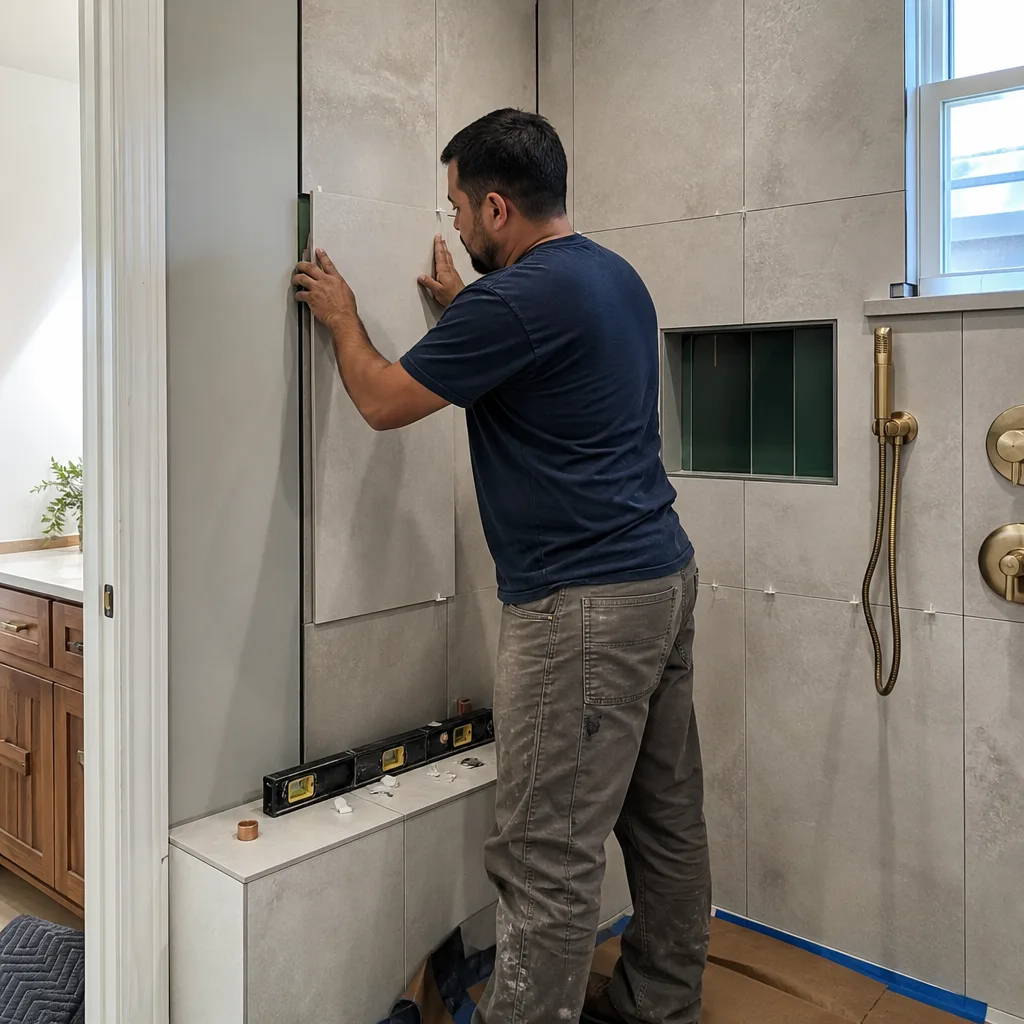
- Installing a shower pan, tile shower, or converting a tub to a shower (building/plumbing permit)
- Replacing a window or changing its size (building permit)
- Replacing a floor – if it involves subfloor work or affects the plumbing beneath
Notice that tile is on neither list. Retiling an existing shower wall over sound substrate with no plumbing or substrate change is borderline – many jurisdictions treat it as cosmetic, but a shower pan replacement always triggers a permit because the pan must be flood-tested before tile goes on. If the job is bigger than a bathroom, the same logic runs through every trade. Our guides on Fence Installation in Santa Ana and Driveway & Pavers in Santa Ana cover how permit thresholds work outside the house.
The Three Trades Where DIY Mistakes Hide the Longest
These three trades are where an amateur mistake can sit quietly for years and then surface at the worst possible time – during a home inspection, an insurance claim, or a water-damage event in the middle of the night.
1. Waterproofing
A shower pan or wet-area wall that isn’t waterproofed correctly fails slowly. The most common error we see is cement board installed without a proper waterproof membrane behind it, or a paint-on membrane applied too thin at the corners. Water wicks into the framing and subfloor for months before the tile in the next room starts to buckle. Correcting a failed shower waterproofing means tear-out and rebuild – $4,000 to $9,000 in Santa Ana for a standard 3×5 shower, and more if the subfloor has to be replaced.
2. GFCI Wiring
Any receptacle within six feet of a water source – including the bathroom sink – requires GFCI protection under current California code. Homeowners who wire their own bathroom often miss that the GFCI must be at the source of the circuit, not just at the receptacle near the sink. Cheap testers from the hardware store don’t always catch a circuit that’s protected downstream but not at the panel. And a missing GFCI is a specific callout on nearly every home inspection report.
3. Vent Fan Ducting
An exhaust fan that vents into the attic instead of through the roof – or that has a crimped or torn duct in the attic run – pushes warm moist air into the attic space, where it condenses on the roof deck and creates mold. On a Santa Ana home with a low-pitch roof and no ridge venting, that damage can be invisible for a decade. The fix for a properly vented fan usually runs $350 to $650 including the roof penetration, and it’s the single cheapest insurance against attic mold we can point to.
Every one of these trades has a habit of looking finished from the outside. That’s the problem. Inspectors know exactly where to look, and so does a buyer’s insurance carrier after a claim.
What Rough-In Plumbing Actually Means – and Why Six Inches Changes Everything
“Rough-in” is the plumbing, electrical, and framing work that goes in before walls close and before tile, drywall, or fixtures cover it. It’s the part of the job the inspector signs off on when it’s still visible. Once the walls are closed, that sign-off window is gone, and the only way to re-inspect is to open the walls again.
Replacing a faucet is a fixture swap. It’s the last 8 inches of the water supply system, and it happens on top of the closed wall. Moving a drain, a supply line, or a vent stack six inches is different work entirely. Here’s why:
- Drain slope matters to the inch. A shower drain must maintain a slope of 1/4-inch per foot of run. Move the drain and you change the run, which changes the required fall, which usually requires reworking the trap and sometimes the branch line below the subfloor.
- Vent stacks are structural to the plumbing system. A drain without a properly vented trap will gurgle, drain slowly, and can siphon other fixtures. Moving a drain often means rerouting the vent, which means cutting into framing.
- Rough-in is inspected in a specific order. Plumbing rough-in, then electrical rough-in, then framing, then insulation, then drywall. If the plumbing moves after rough-in is signed, the whole inspection sequence restarts.
- Permit costs once, mistakes cost twice. A permit for a bathroom rough-in runs a few hundred dollars depending on scope. Tearing open a finished wall to correct a rough-in mistake runs $1,200 to $3,500 in Santa Ana before any repair work even starts.
If you’re also considering structural changes while the walls are open, our team’s experience with Home Additions & ADU in Santa Ana shows how much more complex the rough-in picture gets when framing moves. It’s a different scale of permit and inspection, and the sequencing matters even more.
How to Honestly Calculate Your DIY Savings
Most homeowners run the math wrong. They compare the full professional bid against the cost of the materials they’d buy themselves and call the difference “savings.” That number ignores three costs that almost always show up.
Here’s the honest method we recommend to any homeowner weighing a DIY bathroom project in Santa Ana:
- Material cost of the professional job. Look at the line-item materials on your bid – tile, fixtures, trim, backer board, waterproofing. That’s what you’d spend either way. On a typical Santa Ana hall bath, materials alone run $3,500 to $6,500.
- Labor cost only. Subtract materials from the full bid. That’s the labor being priced. On a $14,000 full bath remodel, roughly $7,500 to $10,000 of that is labor.
- Corrective cost estimate. Be honest here. Waterproofing failures run $4,000 to $9,000 to correct. Electrical corrections (usually caught by the next owner’s inspector) run $600 to $2,500. Vent fan corrections run $350 to $650. If your DIY scope touches any of these and you don’t have experience in the specific trade, price the correction as a likely cost, not a worst case.
- Resale impact. Unpermitted work that’s disclosed at sale usually discounts the home by more than it cost to do right. In Santa Ana’s market, that discount is not small – most buyers treat unpermitted bathroom work as a $5,000 to $15,000 negotiating lever even when the work looks fine.
- Your time. Not the hours you save on labor – the hours you lose to demo, haul-away, trips to the hardware store, and the inevitable re-do. Most homeowners underestimate this by a factor of two.
If the correction costs plus resale impact exceed the labor cost of the professional bid, the DIY math doesn’t work. It’s that simple. And if you go the professional route, make sure the bid reflects a written scope with allowances and a written change-order process – our crews put every price change in writing before any work proceeds, because an allowance that isn’t on paper is a surprise waiting for a date.
Where You Can Legitimately Cut Labor Cost
There’s plenty of room to participate in your own remodel without touching the permit-required work. This is the version of DIY that saves real money without the liability:
- Demo. If your contractor is open to it, you can do the demo yourself – pulling out the old vanity, tearing out drywall, removing the old tile. Just make sure you’re not touching plumbing supply lines or electrical circuits during demo. Ask what’s safe to remove and where to stop.
- Haul-away and dumpster coordination. Renting your own dumpster and coordinating haul-away is often a lower-cost line item than putting it in the bid.
- Paint and finish. Once the walls are closed and inspected, painting, trim work, and cabinet hardware are all yours to handle.
- Fixture selection and purchase. Some contractors are happy to work with homeowner-selected fixtures. Just get the specs in writing so the rough-in is sized correctly – a wall-mount faucet and a deck-mount faucet need completely different rough-in.
- Final cleanup. Post-job cleaning, caulking touch-ups, and screen installation on the vent fan cover are all reasonable homeowner tasks.
- Permit prep. You can pull your own permit and do the paperwork. You can’t do the licensed trade work that requires the license, but the paperwork is yours to handle if you want it.
The principle is straightforward: the homeowner handles what doesn’t need a license. The licensed crew handles what does. Most contractors, including ours, will happily structure a scope that way when it’s clear upfront.
Common Mistakes to Avoid
- Starting demo before you know what’s behind the wall. In Santa Ana homes built before the 1980s, that “simple” tub-to-shower swap can turn up galvanized supply lines, cast-iron drains with corrosion, or knob-and-tube-era framing that fails today’s nailing schedule. Open a small inspection hole and take photos before you commit.
- Believing that no permit means no inspection. Santa Ana’s inspectors work in the interest of the next owner as much as the current one. An unpermitted bathroom doesn’t stay hidden forever – it surfaces in sale disclosures, insurance claims, and refinancing appraisals.
- Installing cement board and calling it waterproofing. Cement board is not waterproof. It’s water-resistant. The waterproof layer goes over it, and the corners and penetrations are where nearly every failure starts.
- Skipping GFCI at the source. A bathroom receptacle within six feet of water needs GFCI protection, and testing it with a store-bought plug tester doesn’t confirm the source is protected. Only a licensed electrician’s diagnostic confirms that.
- Venting the exhaust fan into the attic. This is the most common unpermitted shortcut we correct. It looks finished and it creates mold on the underside of the roof deck in a Santa Ana summer, when attic humidity climbs fast.
- Buying fixtures before the rough-in is set. A freestanding tub, a wall-mount faucet, or a linear shower drain all require rough-in dimensions that can’t be adjusted after the plumbing is signed off.
- Trusting a “no permit needed” phone quote. Any contractor who tells you a permit is optional on a job that clearly needs one is either wrong about the code or planning to skip the inspection. Both are your problem at resale. The permit inspector works for you – that’s why we like him.
When to Call a Professional
Call a licensed contractor in these specific cases: any work touching the plumbing supply or drain system; any electrical change beyond a direct fixture swap; any shower pan or wet-area waterproofing; any bathroom vent fan installation or roof penetration; any wall removal or modification; any window replacement; and any job where you’re not completely certain what’s behind the wall. If you’re selling the home in the next five years, that list gets longer rather than shorter.
Barrett & Sons Construction Santa Ana offers free estimates in Santa Ana – call (888) 325-4971. Every eligible job includes permits pulled and inspections signed, a written scope and allowance on every line, and our 90-Day Done Right Promise in writing on the contract. If you’d prefer to keep some work yourself, we’ll structure the scope so you can. If you’re also planning work elsewhere on the property, our windows and doors, roofing, and additions teams are the same crews and the same written-change-order process.
Frequently Asked Questions
Yes, if the work touches plumbing supply or drain lines, electrical circuits, the shower pan or wet-area waterproofing, the vent fan, wall framing, or windows. Cosmetic work – paint, fixtures, tile over sound substrate – generally does not require a permit. Confirm your specific scope with the City of Santa Ana Building Division before you start; the code does change, and a $200 permit beats a $9,000 correction at resale.
A typical hall bath in Santa Ana runs $14,000 to $26,000 for a licensed full remodel depending on fixtures, tile, and layout changes. A cosmetic refresh (paint, fixtures, vanity, tile refinish) usually runs $4,500 to $9,000. Moving plumbing, relocating walls, or expanding the footprint pushes the number up. Call (888) 325-4971 for an exact quote – estimates are free and every line item is written.
It shouldn’t. Ask any contractor to put the full scope, every allowance, and every price change in writing before work proceeds. Barrett & Sons issues a written change order before any scope change touches the job – no surprise invoices at the end. If a contractor won’t put allowances on paper, that’s your signal to walk.
Usually yes, with limits. Most crews will structure the scope so you handle demo and haul-away, and they take the job from rough-in forward. Stop before you touch plumbing supply lines, drain lines, or live electrical. On a typical Santa Ana hall bath we’ve seen homeowners save $800 to $1,800 on demo labor doing it themselves.
A tub-to-shower conversion without a permit or a flood-tested shower pan. It’s the shortcut that shows up on nearly every home inspection – soft subfloor at the shower curb, a drip into the ceiling below, or a missing GFCI upstream. The correction runs $4,000 to $9,000 depending on how long it ran. Call (888) 325-4971 for a free second opinion on any written estimate before you commit to a fix.
Yes. If a water-damage claim traces back to unpermitted plumbing or waterproofing, most carriers will deny the claim or reduce the payout – and some will cancel the policy after a claim. The financial exposure goes well beyond the cost of the original job. It’s the reason we don’t quote a bathroom without pulling a permit when the scope calls for one.
The Bottom Line
Cosmetic bathroom work is genuinely yours to do. Paint, swap fixtures, switch out a toilet seat, hang the mirror – those are homeowner jobs and no inspector will ever ask about them. Everything touching the plumbing, electrical, waterproofing, or venting is where the rules change, and the Santa Ana inspector will look at those trades the same way a buyer’s inspector will two years from now. If the scope on your bathroom has grown past what’s safe, get a written bid before you start demo. A permit, a written scope, and a licensed crew are cheaper than the correction at resale.
Call Barrett & Sons Construction Santa Ana at (888) 325-4971 for a free estimate. Free second opinion on any written estimate you’ve already received, no trip charge inside the county, and the permanent 10% Senior & Veteran discount. Every job backed by our written 90-Day Done Right Promise.
Written by the team at Barrett & Sons Construction Santa Ana.
See the difference
 Before
 After
 Before
 After
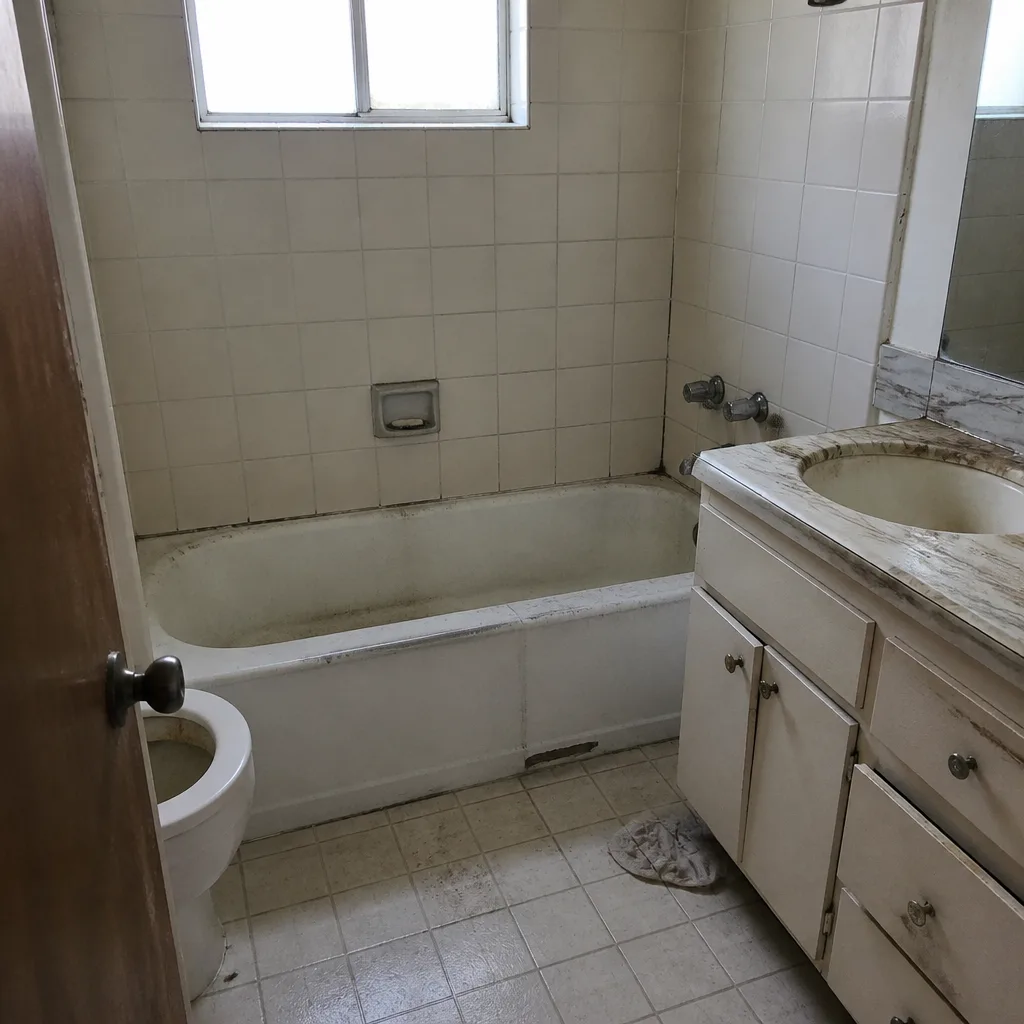 Before
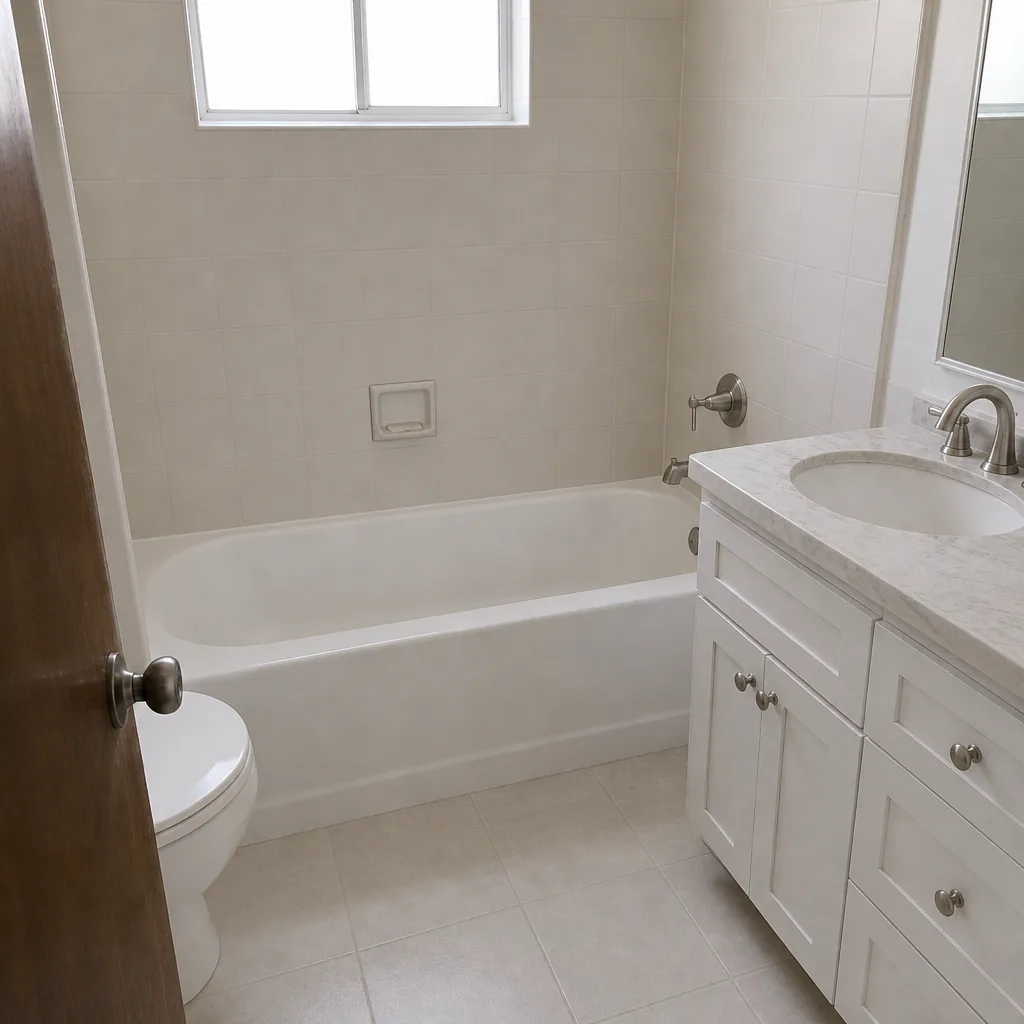 After