Last updated November 18, 2026




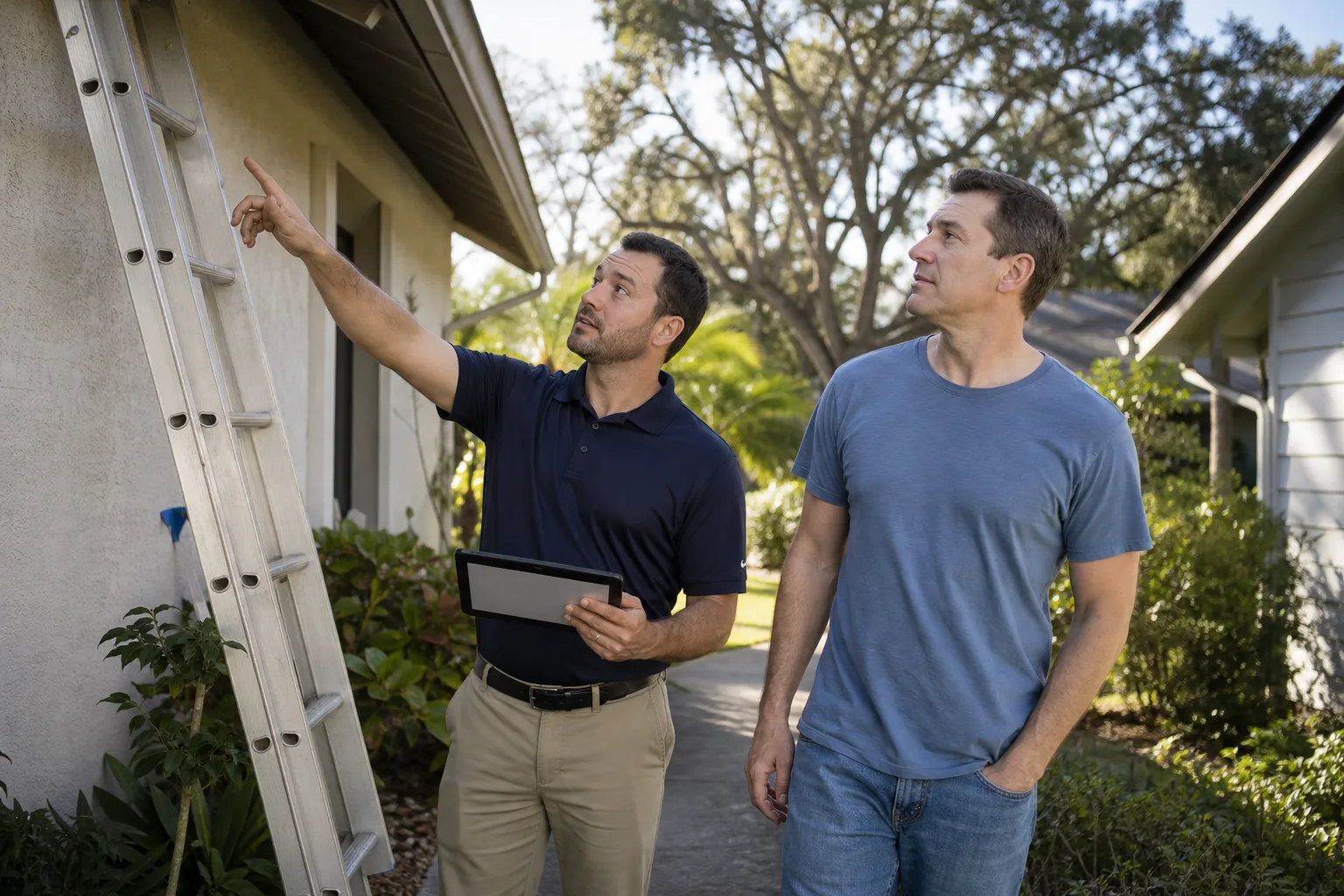
Free written scope consultation - allowances, timeline, and change-order rules on paper before a single trade is scheduled
Fence Installation Maintenance Schedule: What to Do and When
If you stain your wood fence in October, you’ve done it in the wrong order. The Santa Ana winds that arrive from October through February are the same thing that strips the surface oils fresh stain needs to bond, which is why a November-or-later application actually holds up longer than a fall coat. Santa Ana gets about 13 inches of rain a year and weeks of dry, gusting wind; your fence cares far more about the wind than the wet. This guide lays out a maintenance calendar built around that wind season, shows you how to test a fence before you spend a dollar on it, and separates the afternoon jobs from the ones that call for a contractor.
Quick Answer
Wood fence maintenance in Santa Ana follows the wind, not the national home-improvement calendar: clean and inspect in spring, make repairs through summer, and stain from late October into November once the Santa Ana wind season has passed, then check posts and hardware every few months for the rest of the year. Vinyl and aluminum fences need less work but still need annual cleaning and hardware checks. Most homeowners can handle inspection and light cleaning in an afternoon; structural post replacement, gate re-hanging, and anything involving a property-line dispute belong with a contractor.
Styles & brands we work with
- Kitchen remodeling
- Bathroom remodeling
- Home additions & ADU
- Roofing
- Windows & doors
- Driveway & pavers
- Fence
Table of Contents
- Why Santa Ana Fences Run on a Different Calendar
- The Santa Ana Seasonal Maintenance Calendar
- How to Test Whether Your Fence Needs Re-Staining
- Post Base Inspection Without Digging
- Vinyl and Aluminum: Not Zero Maintenance
- What You Can Do in an Afternoon vs. What Needs a Contractor
- Common Mistakes to Avoid
- When to Call a Professional
Why Santa Ana Fences Run on a Different Calendar
National fence-care articles are written for places where rain and freeze-thaw cycles drive the damage. Santa Ana is the opposite. Our fence-killer is dry wind. The Santa Ana winds pull moisture out of wood fibers faster than the sun alone ever would, and they do it during the months when most homeowners assume nothing is happening to their fence. A cedar or redwood board that lives through a wet winter in the Midwest is a different board than one that spends October through February getting worked by 40-mile-per-hour gusts coming off the canyons.
What does that actually do to a board? It shrinks the surface faster than the core, and that’s where checking and splitting come from. You’ll see it first at the end grain and along the top rail. Left alone for two or three seasons, checking turns into splitting, and splitting turns into a board that fails at the fastener. In our experience, the fences that fail early in Santa Ana almost always failed at the top, not the bottom, because that’s where the wind and sun get their best shot.
The wet season here is short and mild, usually December through March. That matters for one thing: it’s when wood swells slightly and when you can actually see whether your drainage is working under a post. It’s not the season that ruins fences. The wind season is.
This is why you’ll hear us talk about timing the way we do about roofing or pavement work elsewhere in the county. The Barrett & Sons Construction Santa Ana home approach to any exterior job starts with the calendar, because the wrong order costs money.
The Santa Ana Seasonal Maintenance Calendar
Here’s the schedule we recommend to Santa Ana homeowners, mapped to our actual weather rather than a catalog’s suggestion. Each season has a short task list; most are visual, and none require special tools.
Spring (March through May): Clean and Inspect
- Walk the full fence line with a notepad. Note loose boards, popped nails, leaning posts, and any spot where the fence meets the ground oddly.
- Wash the fence with a garden hose and a stiff brush, or a low-pressure washer on wood no higher than 1,200 PSI. High pressure carves grooves you’ll have to sand later.
- Check gate hardware. Hinges, latches, and the post the gate hangs from take the most abuse and fail first.
- Clear vegetation back six inches from the fence line. Ivy and jasmine hold moisture against the boards and hide rot.
Summer (June through September): Repair and Prep
- Replace popped nails with screws or ring-shank nails. Standard smooth nails back out in wind.
- Sand any checking or splinters lightly with 80-grit, then 120-grit on the top rail.
- Address any post that showed movement in the spring inspection.
- Do not stain yet. Summer heat drives stain solvent off too fast for a good bond.
Fall (Late October through November): Stain
Wait until the wind season is underway and the daily highs have dropped under about 80 degrees. That’s when stain absorbs instead of flashing off. One coat on a well-prepped fence lasts three to five years here, versus about two if you stain in summer.
Winter (December through February): Watch and Clear
This is when the wet season arrives. Clear debris from the base of the fence after storms so water doesn’t pool against the posts. Check any post that showed movement earlier. And note anything that needs attention when spring comes.
How to Test Whether Your Fence Needs Re-Staining
You don’t have to guess. The water-bead test takes 30 seconds and tells you if you’re looking at a cleaning job or a staining job.
- Find a representative section of the fence, not the shadiest corner and not the sunniest.
- Pour about a quarter cup of water on a horizontal board surface.
- Watch for 30 seconds.
- If the water beads and rolls off, your existing stain or sealer is intact. Clean only.
- If the water soaks in within 10 to 15 seconds but the wood looks even, you’re due for re-staining soon.
- If the water soaks in almost immediately and the surface looks gray or fuzzy, the wood has lost its finish entirely. Clean, sand, and stain – this season.
One test isn’t enough. Do it in three spots: a south-facing section, a north-facing section, and along the bottom rail. The bottom is the most telling, because that’s where stain fails first, and it’s the board you never look at.
Gray wood is a finish problem, not a wood problem. Graying means the lignin has oxidized; sand it back and you’ll find the original color underneath. If the board is gray and soft when you press a thumbnail into it, that’s rot, and no amount of stain will fix it.
Post Base Inspection Without Digging
Rot starts at the bottom of the post, where the wood meets soil, and it climbs. You don’t need a shovel to find it, and you shouldn’t use one – digging exposes the base you’re trying to check and can destabilize a post that was fine. The screwdriver probe does the job.
- Take a standard flathead screwdriver, not a heavy pry bar.
- Press the tip firmly into the wood at the base, about two inches above the soil line, on two faces of the post. Moderate thumb pressure only.
- Watch what the wood does. A healthy post resists and shows a shallow dent. A post with early rot will let the tip sink a quarter inch or more without much effort, and the wood will feel soft or spongy.
- Repeat at chest height. If the top is solid and the bottom gives, the base is failing.
- Test every post on a long run, not just the ones that look off. The ones that look fine are the ones you’re checking for.
What you’re looking for is the difference between cosmetic checking (surface cracks, still firm) and rot (soft, spongy, sometimes crumbly). Checking is normal on any sun-exposed post. Rot is structural, and it means the post needs replacing, because a post post that’s rotted below grade is a post that’s going to lean next wind season.
That’s a job for a pro, not a Saturday. In Santa Ana, we’ve seen more fence failures from rotted post bases than any other cause, and by the time a homeowner sees the lean, the whole run usually needs attention. If you’re planning a new installation anyway, our Fence Installation in Santa Ana page covers post setting and material choices.
Vinyl and Aluminum: Not Zero Maintenance
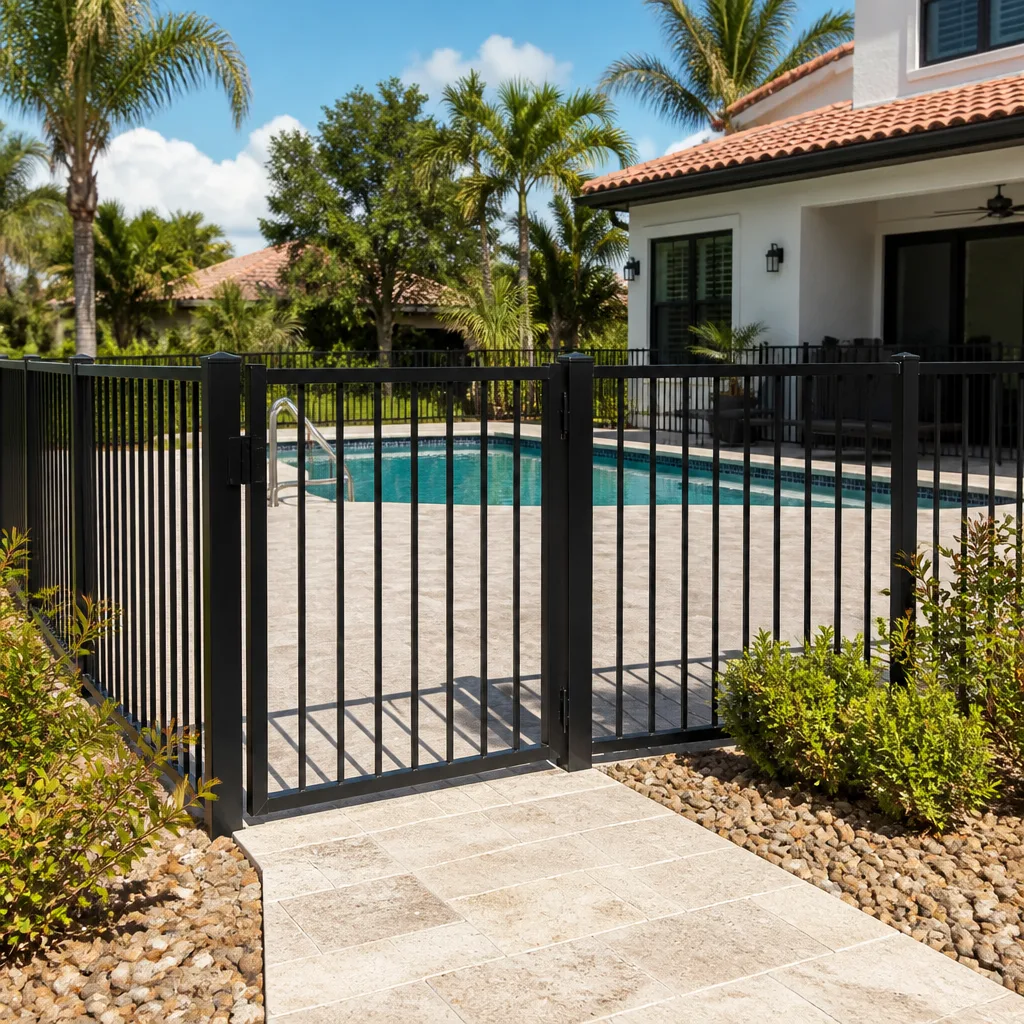
Vinyl and aluminum fences get marketed as maintenance-free, and that’s the wrong word. They don’t need staining or sealing, and they won’t rot. They still age, and they still need a yearly check. Here’s what to actually watch for.
Vinyl
- Wash once a year with a garden hose and mild soap. Skip the pressure washer, which can force water into the seams.
- Check for UV yellowing or chalking, especially on south-facing panels. Chalking is a surface breakdown, not a cosmetic issue.
- Inspect panels for impact cracks, which happen more than people expect in neighborhoods where kids and balls meet fences.
- Look at the posts where they meet the ground. The vinyl doesn’t rot, but the wood or concrete inside the post can.
Aluminum
- Wash once a year to remove salt and dust buildup.
- Check all fasteners and hinges. Aluminum is corrosion-resistant, but steel hardware isn’t, and it’s the hardware that fails.
- Touch up any scratched powder coat with matching touch-up paint. Bare aluminum won’t rust, but the finish holds up better with attention.
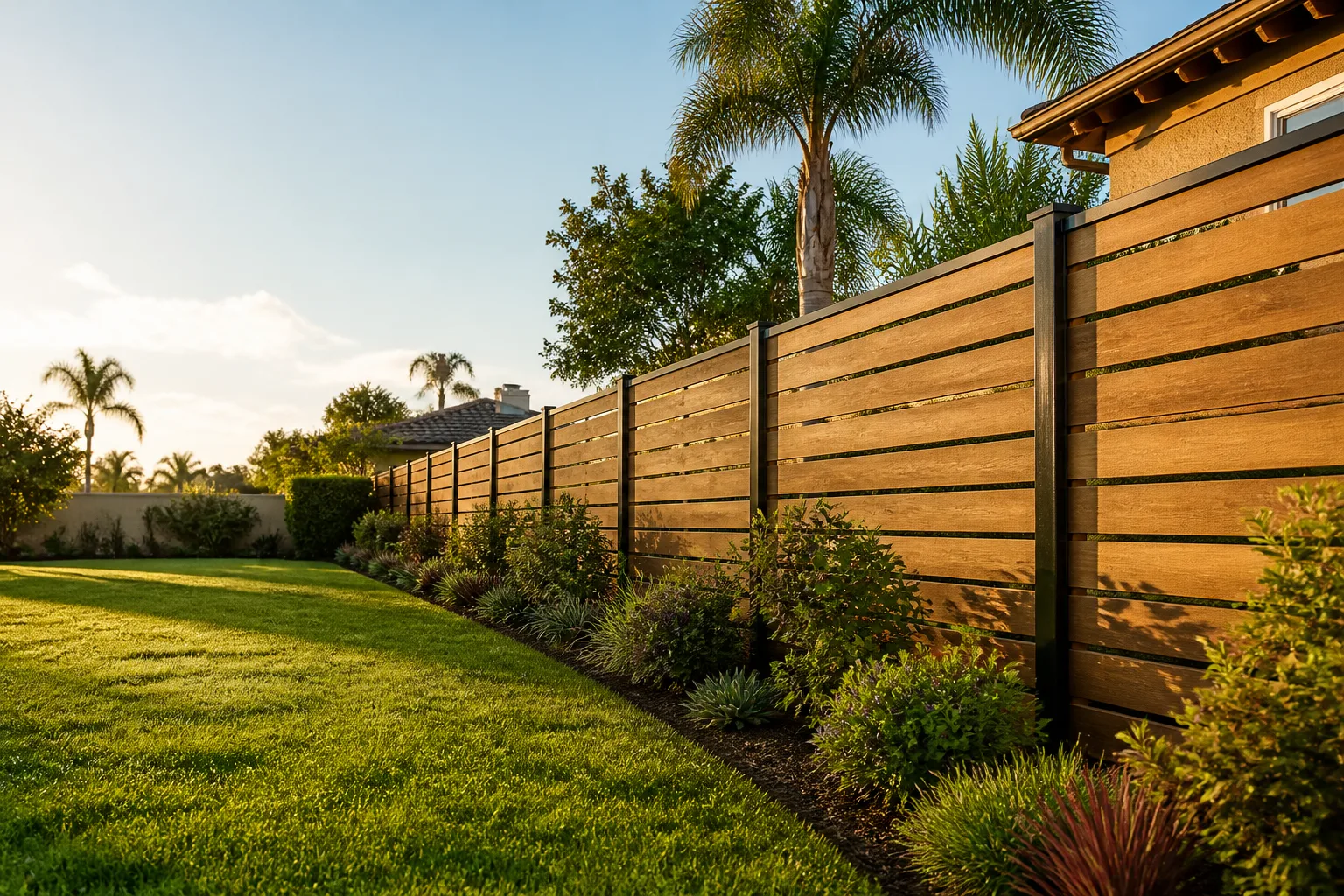
Both materials handle the Santa Ana wind better than wood, which is why we see vinyl and aluminum going up in the newer sections of town. Neither is truly zero-maintenance. Anyone telling you otherwise hasn’t had one through a wind season.
What You Can Do in an Afternoon vs. What Needs a Contractor
The most expensive fence mistake we see isn’t rot; it’s a homeowner taking on a job that should have gone to a contractor and turning a $300 repair into a $3,000 rebuild. Here’s the honest split.
Afternoon jobs (do these yourself)
- Full visual inspection with a notepad
- Washing the fence with a garden hose and brush
- Sandng rough spots and checking for splinters
- Replacing popped nails and screws in boards
- The water-bead test across multiple sections
- Screwdriver probe on every post base
- Gate hardware tightening
- Clearing vegetation from the fence line
Contractor jobs
- Replacing any post. Post removal and setting in Santa Ana’s clay-heavy soil is a two-person job, and the hole needs to go below the frost line (yes, we have one, technically) to hold.
- Re-hanging a gate that’s sagged out of square. Gate posts carry the heaviest load of any post on a fence.
- Replacing more than a few consecutive boards. Once several boards are gone, the rails usually need attention too.
- Anything involving a shared fence on a property line, which is a legal question as much as a construction one.
- Staining a fence over about 150 linear feet. The labor alone makes it worth pricing out.
One more thing: if your fence shares a boundary with a neighbor, get the boundary line verified before anyone touches it. Staining is harmless, but a post replacement on the wrong side of the line is a headache nobody needs.
Common Mistakes to Avoid
- Staining in October before the wind season. The Santa Ana winds strip the surface oils before the stain cures. Wait until late October or November, when the wind has done its work and the temperatures have dropped. The difference in how long your stain lasts is measured in years.
- Pressure-washing wood at full power. A 3,000 PSI washer driven at wood carves grooves you’ll have to sand out and forces water into grain, which it isn’t meant to do. Keep it under 1,200 PSI and keep the wand moving.
- Skipping the post base. Homeowners inspect the visible board faces and miss the eight inches at the ground where every fence failure in Santa Ana actually starts. Probe every post, every time.
- Treating gray wood as a lost cause. Graying is oxidized finish, not rotten wood. Sand it and stain it and it comes back. Soft, spongy wood is the problem, and no stain fixes that.
- Using a smooth nail to replace a popped fastener. Smooth nails back out in wind. Ring-shank nails or screws hold.
- Believing “vinyl is maintenance-free.” It isn’t. Vinyl still needs annual cleaning, a UV check, and a look at the posts. Treating it as untouchable is how it fails.
- Ignoring a leaning post because “it’s holding for now.” A post that leans after wind season has usually rotted below grade. The fix is a post replacement, and the longer you wait, the more of the run goes with it.
See the difference
 Before
 After
 Before
 After
 Before
 After
When to Call a Professional
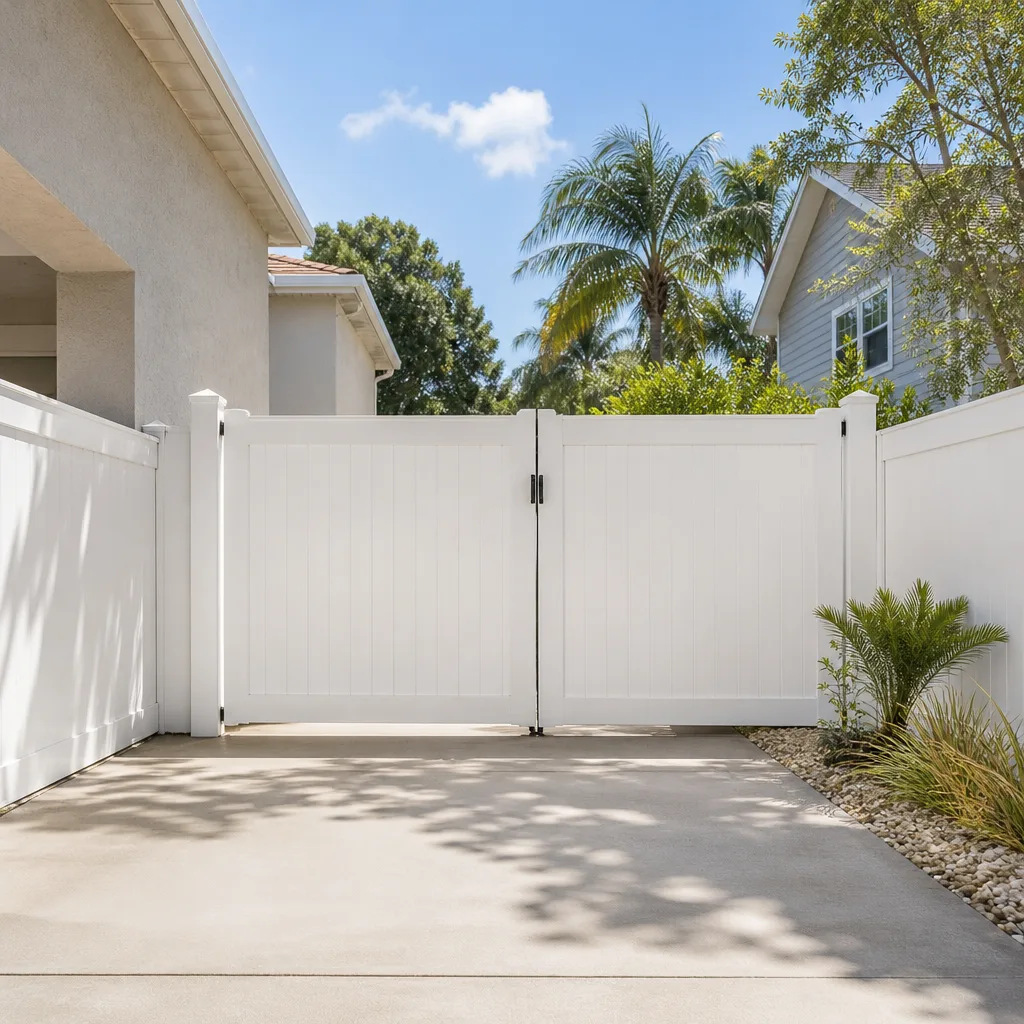
Call us when the fence needs more than cleaning and inspection. A leaning post, a gate that won’t close square, more than a handful of split boards, a post that fails the screwdriver probe, or anything that touches a property line: those are contractor jobs, not weekend jobs. If you’re weighing a full rebuild against repair, that conversation deserves an honest walk-through rather than a phone quote. In our experience, about half of what homeowners think is a rebuild is a repair, and the other half is past it. The honest answer saves money either way.
Barrett & Sons Construction Santa Ana offers free estimates in Santa Ana. Call (888) 325-4971 and we’ll walk the fence line with you and put the scope in writing before any work happens.
Frequently Asked Questions
Every three to five years if you stain in late fall, and about every two years if you stain in summer, because the heat keeps the stain from bonding well. The water-bead test tells you when it’s actually time, so you’re not guessing or going by the calendar alone.
Yes, but less. Vinyl needs an annual wash with mild soap, a check for UV chalking on south-facing panels, a look for impact cracks, and the posts checked where they meet the ground. That’s a 30-minute job for most Santa Ana homes, and it adds years to the fence.
Not safely on most fences. Post replacement is a two-person job that involves pulling the old post, digging a new hole below grade, and setting the new post plumb before the concrete cures. If the post is at a gate, the margin for error is even smaller.
Use the screwdriver probe. Press a flathead screwdriver into the post about two inches above the soil line with moderate thumb pressure. If the wood resists, the post is fine. If the tip sinks a quarter inch or more and the wood feels soft, the base is beginning to rot and the post needs replacing.
For staining, late October into November after the wind season starts. For repairs and post replacement, late spring through early fall, when the ground has dried out enough to set concrete properly. Gate adjustments and hardware fixes can happen any month.
It’s the main cause of fence damage here, more than rain. The dry wind pulls moisture out of wood fast enough to cause checking and splitting, which is why top rails and end grain fail first. Inspecting after wind season and staining in late fall is the single best protection.
The Bottom Line

Santa Ana fences don’t need more maintenance than fences elsewhere; they need it on a different calendar. Clean and inspect in spring, repair in summer, stain in late fall after the wind season, and check posts every few months with a screwdriver probe. Test the wood with the water-bead test before you spend money on stain. Know that vinyl and aluminum are low maintenance rather than no maintenance. And know which jobs are yours and which belong to a contractor. Get the order right, and your fence will outlast the neighbor’s by a decade.
If you’d like a second set of eyes on your fence, or you’re ready to price a repair or a full installation in Santa Ana, Barrett & Sons Construction Santa Ana offers free estimates and written scopes before any work starts. Look up our license number, then call (888) 325-4971.
Written by the team at Barrett & Sons Construction Santa Ana.